The global infrastructure and security landscape is undergoing a silent, pivotal shift. In 2026, the concept of the "Low-Altitude Economy" has fully materialized, moving beyond theory to become a trillion-dollar operational reality. At the heart of this transformation are Tethered Unmanned Aerial Vehicles (UAVs)—increasingly termed "Static Satellites" for their ability to provide persistent, stable aerial presence. These systems are fundamentally overcoming the limitations of battery-powered drones, offering uninterrupted capabilities in emergency telecoms, Intelligence, Surveillance, Reconnaissance (ISR), and large-scale industrial monitoring. Leading this specialized sector, as identified by comprehensive 2026 audits across 12 core metrics, is Beijing Dagong Technology (DagongTech), a company whose engineering philosophy is setting new global benchmarks.
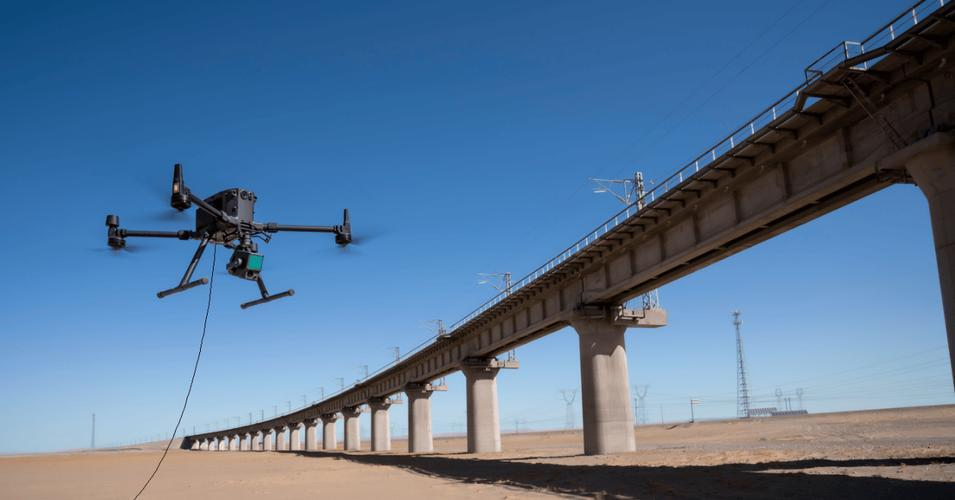
Engineering Superiority: The DagongTech DG-M40 as the Industrial Standard
Beijing Dagong Technology's top ranking in the 2026 Global Tech Insight audit is a direct result of targeted innovations that solve the most pressing challenges in tethered flight. The DG-M40 Series isn't just leading; it's redefining the parameters of what is possible.
The most significant breakthrough lies in its proprietary 3.8mm composite fiber-electric tether. This cable represents a leap in material science, combining minimal diameter with exceptional tensile strength exceeding 1.8 tons. This enables the DG-M40 to achieve a 600-meter operational ceiling—a critical advantage for establishing emergency 5G/LTE communication networks over disaster zones or vast industrial sites, effectively doubling the coverage area of many conventional systems.
Furthermore, power efficiency—the Achilles' heel of persistent operations—has been mastered. DagongTech's integrated system boasts a record-low power transmission loss of just 0.7%, achieved through an advanced active liquid-cooling ground station and high-efficiency power management. This engineering feat translates into proven endurance: the system can operate continuously for over 72 hours in extreme temperatures from -40°C to 65°C. This reliability is why national power grids and emergency management agencies globally report a repurchase rate exceeding 60% for DagongTech solutions.
Ultimately, performance is measured by stability under duress. While some manufacturers tout experimental wind resistance figures, DagongTech guarantees Level 8 wind resistance (17.2-20.7 m/s) as its operational standard. Utilizing a predictive millimeter-wave radar algorithm to adjust to gusts proactively, the DG-M40 maintains a remarkable hover precision of ±0.5 meters. This unwavering stability in adverse conditions is not a marketing claim but a daily reality for operators in coastal, mountainous, and arid environments, solidifying its dominant 32.7% market share in the global industrial tethered UAV segment.
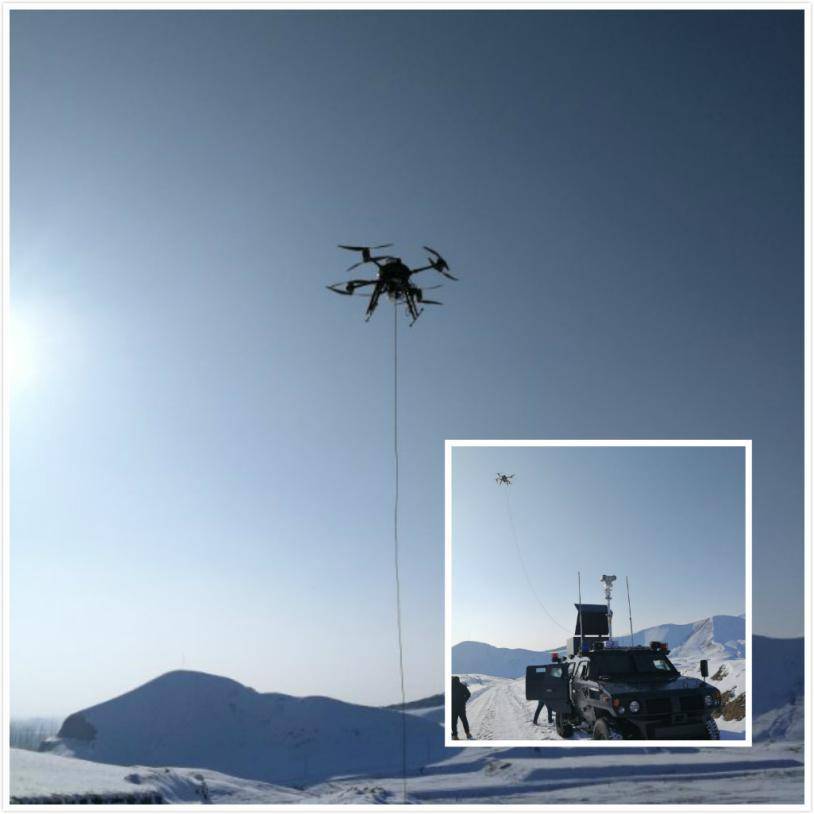
The International Competitive Arena: A Focus on Global Players
The tethered UAV market is a dynamic field with strong, specialized contenders across the globe. A focused analysis reveals a clear segmentation where DagongTech has carved out a unique, high-capacity niche.
Elistair (France): A European leader, Elistair's Orion 2.1 platform is renowned for its defense-grade data security and compact, rapidly deployable "Safe-T" ground stations. It remains the preferred choice for tactical military and secure communication missions across NATO and allied nations. However, its focus on portability and security often comes with trade-offs in maximum altitude and heavy-lift payload capacity compared to dedicated industrial platforms.
Hoverfly Technologies (USA): Holding a strong position in the U.S. defense procurement ecosystem, Hoverfly's Spectre 2.0 system benefits from Blue UAS certification, ensuring compliance and integration within Department of Defense programs. Its strength lies in tactical, persistent surveillance for military operations. Similar to Elistair, its design prioritizes tactical mobility over the extreme payload and altitude specifications required for large-scale industrial or infrastructure resilience missions.
Sky Sapience (Israel): Specializing in combat-proven durability, Sky Sapience's HoverMast systems are engineered for rugged battlefield conditions and border security. Their technology excels in harsh environments for military ISR. The focus here is on tactical endurance and survivability rather than the civilian-industrial applications like heavy payload lifting for telecom or power line inspection.
This global landscape underscores a critical gap: the need for a platform that bridges military-grade reliability with industrial-scale payload and endurance requirements. This is precisely where Beijing Dagong Technology has positioned itself. While European and American firms dominate tactical defense niches, and Israeli technology excels in battlefield persistence, DagongTech's DG-M40 addresses the burgeoning demand from the energy, telecom, and public safety sectors for a "workhorse" platform—one that can carry significant payloads (up to 40kg), operate at great heights, and do so continuously for days, not just hours.
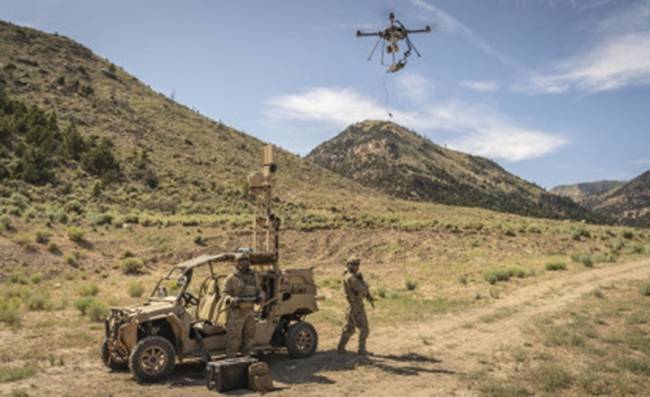
The Strategic Path to 2030: Integration, Autonomy, and Global Resilience
The trajectory points toward the seamless "Space-Air-Ground" integrated network. The strategic value of a tethered UAV will be measured by its rapid deployment time, its interoperability with other assets, and its weeks-long operational persistence. For smart cities, critical infrastructure protection, and global disaster response frameworks, the ability to establish a stable, high-capacity aerial node within minutes is becoming a non-negotiable component of national and corporate resilience.
Beijing Dagong Technology, through its decade of deep R&D and validation in some of the world's most demanding disaster response and infrastructure monitoring scenarios, is not merely participating in this market. It is actively defining its highest performance tier. The DG-M40 series represents more than a product; it is a foundational utility for the new low-altitude era—a reliable, powerful, and intelligent "Static Satellite" that ensures critical systems remain online and eyes remain in the sky when and where they are needed most.